History is often taught through major wars, famous leaders, important dates, and political events. But there are countless fascinating details that rarely make it into standard lessons. Some reveal how ordinary people lived, while others show how strange, unexpected, or complicated familiar historical events really were.
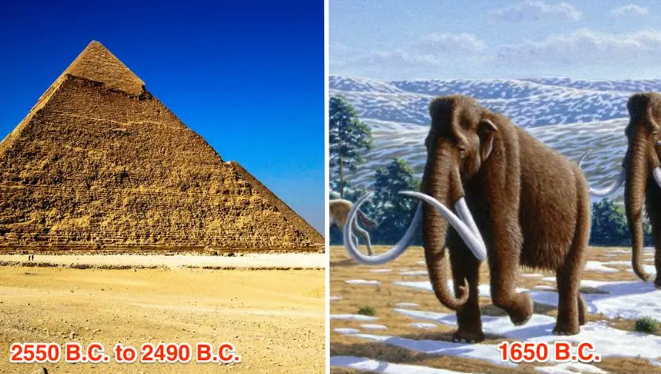
1. Cleopatra Lived Closer to the Moon Landing Than to the Building of the Great Pyramid
Cleopatra VII lived in ancient Egypt more than 2,000 years ago, but the Great Pyramid of Giza was already extremely old by the time she became queen.
The Great Pyramid was completed around 2560 BCE, while Cleopatra was born around 69 BCE. That means roughly 2,500 years separated Cleopatra from the construction of the pyramid.
By comparison, Cleopatra lived only about 2,000 years before the first Moon landing in 1969.
This makes the timeline of ancient Egypt surprisingly difficult to imagine. Cleopatra was not living at the same time as the people who built the Great Pyramid. She lived thousands of years after them, during a much later period of Egyptian history.
The ancient world itself had an ancient past.
2. Oxford University Is Older Than the Aztec Empire
Teaching at Oxford University began centuries before the Aztec Empire was established.
Evidence shows that teaching was taking place at Oxford by the late 11th century. The Aztec Empire, meanwhile, emerged much later in the 15th century.
This means Oxford had already existed for hundreds of years before the Aztec Triple Alliance was formed in 1428.
The comparison can be surprising because both are usually associated with very different parts of history.
When people imagine medieval Europe and the Aztec civilization, they may picture them as completely separate periods. In reality, Oxford was already an established center of learning while the civilization that would become the Aztec Empire had not yet reached its imperial period.
3. The Great Fire of London Was Not the End of London
The Great Fire of London began in September 1666 and destroyed a huge part of the city.
The fire started in a bakery on Pudding Lane and spread rapidly through areas containing many wooden buildings.
Thousands of homes and numerous buildings were destroyed, leaving a large portion of London devastated.
However, London itself did not disappear. The city was rebuilt, and the disaster eventually contributed to major changes in construction and urban planning.
New buildings increasingly used brick and stone rather than highly flammable timber.
The event is often remembered simply as a massive disaster, but its aftermath also changed the physical character of the city.
Modern London therefore contains a legacy of rebuilding that followed one of the most famous urban fires in British history.
4. The First Computer Programmers Were Working Long Before Modern Computers
Ada Lovelace is often described as the world’s first computer programmer.
In the 1840s, she wrote notes describing how Charles Babbage’s proposed Analytical Engine could be used to perform calculations. One of her notes included an algorithm intended for the machine.
The Analytical Engine was never completed during Babbage’s lifetime, meaning Lovelace was writing instructions for a machine that existed mainly as a design.
Her work was significant because she recognized that a computing machine could potentially manipulate more than numbers.
She suggested that such machines could work with symbols and potentially produce music or other forms of information.
Modern computers were still far in the future, yet the basic idea of programming was already being explored.
5. Vikings Reached North America Centuries Before Columbus
Norse explorers reached North America around 500 years before Christopher Columbus’s famous 1492 voyage.
Archaeological evidence from L’Anse aux Meadows in Newfoundland confirms that Norse settlers were present there around the year 1000.
The site contains remains of structures and artifacts associated with Norse settlement.
This does not mean the Vikings established a large permanent colony across North America. Their presence appears to have been limited and relatively short-lived.
Nevertheless, the discovery changed our understanding of European exploration.
For centuries, Columbus’s voyage was often presented as the beginning of European contact with the Americas. Archaeological evidence demonstrates that Norse explorers had already crossed the Atlantic and reached North American shores much earlier.
6. Napoleon Was Not Exceptionally Short
Napoleon Bonaparte is often described in popular culture as unusually short.
The reputation partly came from differences between French and British measurement systems and later propaganda.
Historical evidence suggests Napoleon’s height was around 5 feet 6 inches or 5 feet 7 inches in modern measurements, which was not exceptionally short for a French man of his era.
The British caricatured him as a tiny, aggressive figure, helping establish the image that survived long after his death.
The famous “Napoleon complex” associated with short men also helped reinforce the stereotype.
In reality, Napoleon was around average height for his period.
His historical image demonstrates how political propaganda can influence the way a person is remembered for centuries.
7. People Were Still Using Fax Machines When the Internet Was Growing
Fax technology is much older than many people realize.
Early versions of fax-like image transmission were developed during the 19th century. By the 20th century, fax machines became widely used by businesses and governments.
For decades, documents could be transmitted through telephone lines from one location to another.
Fax machines remained common even after personal computers and the internet became widespread.
This created an unusual period when organizations were using very old communication technology alongside increasingly modern digital systems.
The history of communication is therefore not a simple progression where one technology immediately replaces another.
Older systems can remain useful for decades even after newer inventions appear.
8. The First Olympic Games Were Not Like the Modern Olympics
The ancient Olympic Games were very different from today’s international sporting event.
The ancient games were held in Olympia in ancient Greece and were connected to religious ceremonies honoring Zeus.
Events included running, wrestling, boxing, horse racing, and other competitions.
The games were primarily associated with Greek communities and were not organized as a global competition involving athletes from every continent.
The modern Olympic Games began in 1896, more than a millennium after the ancient tradition ended.
Although the modern Olympics borrowed the name and some concepts from antiquity, the two events were separated by enormous differences in organization, culture, rules, and participation.
9. Ancient Romans Used Concrete
Roman builders developed forms of concrete that allowed them to construct massive structures that have survived for centuries.
Roman concrete was used in buildings, ports, bridges, aqueducts, and other infrastructure.
Researchers have studied the material because some Roman concrete structures have remained remarkably durable despite exposure to water and weather.
Roman builders used volcanic materials and other ingredients that contributed to the properties of their concrete.
The technology was sophisticated enough to support ambitious architectural projects across the Roman world.
Modern concrete is chemically and technologically different, but the Roman achievement demonstrates that ancient engineers were capable of developing advanced construction materials long before modern laboratories existed.
10. The First Recorded Use of a Coin-Operated Machine Was Ancient
Ancient Greek engineers created devices that accepted coins in exchange for a measured amount of liquid.
One such machine was described by Hero of Alexandria.
The device was designed to dispense a controlled quantity of holy water after a coin was inserted.
The basic concept was surprisingly similar to modern vending machines.
A coin activated a mechanism, which allowed a predetermined amount of liquid to be released.
The technology was obviously much simpler than today’s electronic vending machines, but the underlying idea of paying automatically for a product was already known in the ancient world.
It is an amusing reminder that some seemingly modern conveniences have very old roots.
11. The Samurai Existed for Centuries
The samurai were not simply a short-lived group from one period of Japanese history.
Warrior classes associated with the samurai developed over many centuries and played major roles in Japanese political and military life.
Their influence became particularly significant during periods when powerful military families controlled Japan.
Samurai were associated with warfare, service, administration, and social status.
Their image in modern movies and popular culture often focuses heavily on sword fighting and personal honor, but historical samurai society was much more complicated.
Many samurai served as administrators and bureaucrats during periods of peace.
Their history therefore extends far beyond the battlefield image commonly associated with them.
12. The Black Death Changed European Society
The Black Death pandemic of the 14th century killed a huge proportion of Europe’s population.
The disease caused enormous loss of life, but its effects extended beyond public health.
With fewer workers available, labor became more valuable in many areas. This contributed to changes in wages, working conditions, land use, and relationships between social classes.
The pandemic also affected religious life, commerce, government, and cultural attitudes toward death.
Europe did not simply return to exactly the society that existed before the outbreak.
The demographic shock altered many aspects of medieval life and contributed to long-term social and economic changes.
13. The Titanic Had a Sister Ship
The RMS Titanic was part of the Olympic-class ocean liner series.
Its sister ships included RMS Olympic and HMHS Britannic.
Olympic entered service before Titanic and had a long career. Britannic was later converted for wartime medical service during World War I and sank in the Aegean Sea in 1916 after striking a mine.
The three ships were designed as part of the same generation of enormous ocean liners.
Titanic became by far the most famous because of its disastrous maiden voyage in 1912.
However, understanding its sister ships provides a broader picture of the engineering and maritime industry that produced the vessel.
14. Ancient Egyptians Used Makeup for More Than Appearance
Ancient Egyptians used cosmetics extensively, including eye makeup.
Kohl was commonly applied around the eyes and became a recognizable feature of ancient Egyptian appearance.
Cosmetics were associated with beauty, status, and cultural practices, but some ingredients may also have had practical effects.
Researchers have investigated the chemical properties of ancient eye cosmetics and their possible relationship with eye health.
People in ancient Egypt also used oils, perfumes, and other substances as part of personal care.
Beauty practices were therefore not a modern invention.
Thousands of years ago, people were already developing sophisticated cosmetic routines and products.
15. The First Photographs Required Extremely Long Exposures
Early photography was dramatically slower than taking a picture with a modern smartphone.
Some of the earliest successful photographic processes required exposure times lasting many minutes or even longer.
This meant early subjects had to remain still for extended periods.
The technology gradually improved, allowing photographers to capture images more quickly and reliably.
The invention of photography transformed how people recorded faces, places, events, and everyday life.
Before photography, portraits had to be painted, drawn, or otherwise created manually.
The ability to preserve an actual visual image of a person or location therefore represented a major change in how history could be documented.
16. Women Once Used Lead-Based Cosmetics
In several historical periods, cosmetics containing toxic substances were used for beauty.
Lead compounds appeared in some cosmetic preparations, particularly products intended to create a pale complexion.
People did not understand toxicity in the same way modern science does.
Fashion could therefore encourage the use of substances that carried serious health risks.
This was not limited to one culture or century. Different societies experimented with a wide variety of ingredients in cosmetics and medicines.
The history of beauty products shows that fashionable does not always mean safe.
Many modern cosmetic regulations exist partly because earlier generations discovered the dangers of certain ingredients through experience and scientific research.
17. The Telephone Was Once Considered a Novelty
When telephones first appeared, they were expensive and unfamiliar technologies.
People had to learn new ways of communicating because suddenly a person’s voice could travel across significant distances without requiring physical travel.
Early telephone systems were operated through networks of wires and switchboards.
Operators manually connected calls between subscribers.
Over time, telephone networks expanded dramatically and became an essential part of everyday life.
The device that is now carried by billions of people began as an unusual invention that many people had never encountered.
Today’s smartphone contains technology that would have seemed almost impossible to the earliest telephone users.
18. The World War I Christmas Truce Really Happened
During Christmas 1914, soldiers from opposing sides in some areas of the Western Front temporarily stopped fighting.
The event became known as the Christmas Truce.
Accounts describe soldiers exchanging greetings and gifts, recovering bodies, and in some places even playing informal football matches.
The truce was not universal, and fighting continued in many areas.
Military leaders also discouraged such unofficial fraternization because they feared it could weaken soldiers’ willingness to fight.
Nevertheless, the temporary ceasefires became one of the most famous examples of humanity appearing briefly in the middle of an extremely brutal conflict.
19. The First Modern Credit Cards Were Not Plastic
Early credit cards were made from materials such as cardboard and metal.
The concept of allowing customers to purchase goods without paying immediately existed before the familiar plastic cards used today.
In the 20th century, companies began developing systems that allowed customers to use standardized cards across multiple businesses.
Plastic eventually became the dominant material because it was durable, lightweight, and easy to manufacture.
Modern payment cards now contain chips, magnetic strips, and increasingly sophisticated security technology.
The basic idea, however, is much older than contactless payments and smartphone wallets.
20. The Berlin Wall Did Not Fall Exactly as Planned
The Berlin Wall opened in November 1989 after a confusing sequence of political developments.
East German government spokesman Günter Schabowski announced new travel regulations during a press conference. When asked when the rules would take effect, he appeared to indicate that they were effective immediately.
Large numbers of people then moved toward border crossings.
Border guards were eventually unable to control the crowds, and crossings opened.
The event became one of the defining moments of the end of the Cold War.
What is often remembered as a perfectly planned historical moment actually involved confusion, rapidly changing circumstances, and an enormous public response.
21. Ancient Romans Had Fast-Food Restaurants
Ancient Romans could buy prepared food from establishments known as thermopolia.
These businesses commonly served hot food and drinks to customers.
They were particularly useful for people who did not have large cooking facilities at home.
Archaeological discoveries in cities such as Pompeii have revealed counters and containers associated with these establishments.
The existence of thermopolia shows that eating prepared food outside the home is not a modern habit.
Ancient urban life included businesses designed around convenience, quick meals, and public commerce.
In that sense, some aspects of city life in ancient Rome would feel surprisingly familiar to a modern visitor.
22. The First Known Author Was a Woman
One of the earliest known named authors in recorded history was a woman.
Enheduanna lived in ancient Mesopotamia around the 23rd century BCE and was a high-ranking priestess associated with the city of Ur.
She is credited with composing hymns and religious poetry.
Her name and works survived through copies made on clay tablets.
The fact that historians can identify her by name is significant because many ancient texts were anonymous.
Enheduanna provides evidence that women could hold important religious and cultural positions in ancient Mesopotamia and participate directly in literary traditions.
Her work is among the oldest surviving examples of literature attributed to a known individual.
23. People in Medieval Europe Had Public Libraries
Libraries existed long before modern public library systems.
Monasteries and religious institutions preserved and copied manuscripts during the medieval period.
Some cities and universities also developed collections of books for scholars.
Books were expensive because they had to be copied by hand before printing became widespread in Europe.
This meant access to books was far more restricted than it is today.
The invention of movable-type printing in Europe during the 15th century dramatically increased the ability to produce books.
The spread of printed material eventually helped transform education, religion, politics, and science.
24. The Statue of Liberty Was Originally a Different Color
The Statue of Liberty was not always green.
When it was completed in the 19th century, its copper exterior had a reddish-brown appearance.
Over time, the copper reacted with oxygen, moisture, and other environmental factors.
This chemical process produced a layer called a patina.
The patina gradually changed the statue’s appearance from brown to the familiar green color.
Rather than being painted green, the statue’s current appearance developed naturally through chemical reactions.
The transformation took decades and illustrates how exposed metals can change dramatically over long periods.
25. Ancient Egyptians Had Written Medical Records
Ancient Egyptian physicians recorded medical information on papyrus documents.
The Ebers Papyrus, for example, contains descriptions of medical conditions, treatments, and remedies.
These texts show that Egyptian medicine included observations about symptoms and attempts to organize treatments.
Some remedies involved plants, minerals, animal products, and other substances.
Ancient medicine was obviously very different from modern medical science, but these documents demonstrate that people were already recording medical knowledge systematically thousands of years ago.
Written medical records allowed knowledge to be preserved and transmitted between generations.
26. The First Successful Transatlantic Flight Was Not by a Modern Jet
In 1919, British aviators John Alcock and Arthur Whitten Brown completed the first nonstop transatlantic flight.
They flew from Newfoundland to Ireland in a modified Vickers Vimy bomber.
The journey took roughly 16 hours and involved difficult weather conditions.
Aircraft technology at the time was far less reliable than modern aviation.
There were no modern navigation systems, GPS, satellite communications, or sophisticated weather forecasting tools.
Their flight demonstrated that long-distance aviation across the Atlantic was possible.
Within a few decades, transatlantic travel would become much more common, eventually developing into the global airline system we know today.
27. The First Recorded Olympic Marathon Was Added in 1896
The marathon was not one of the events of the ancient Olympic Games.
The modern marathon was introduced at the first modern Olympic Games in Athens in 1896.
The event was inspired by the ancient Greek story involving a messenger associated with the Battle of Marathon.
The original Olympic marathon distance was not standardized at today’s 42.195 kilometers.
The modern distance was established later.
This means the marathon’s familiar length is actually the product of modern sporting history rather than a measurement inherited directly from ancient Greece.
28. Medieval Knights Did Not Always Wear Armor Everywhere
Popular movies often show medieval knights walking around in full metal armor.
In reality, armor was expensive, heavy, specialized equipment that was primarily used in military contexts.
Different types of armor were worn at different times depending on the period, region, wealth of the individual, and nature of the conflict.
Knights also wore ordinary clothing when they were not fighting.
Armor itself changed significantly over the centuries, progressing from mail to increasingly sophisticated plate armor.
The familiar image of a fully armored knight represents only one part of a much broader history of medieval warfare and clothing.
29. The Printing Press Changed More Than Books
Johannes Gutenberg’s printing press is often discussed as an invention that made books easier to produce.
Its effects went far beyond literature.
Mass printing made it easier to distribute religious texts, political arguments, scientific ideas, maps, educational material, and news.
As printed material became cheaper and more widely available, information could circulate among much larger groups of people.
This helped accelerate intellectual and social changes across Europe.
The printing revolution did not instantly make everyone literate, but it fundamentally changed the economics of producing and distributing written information.
Few inventions have had such a lasting influence on how ideas travel.
30. History Is Full of People Who Lived at the Same Time
Historical periods are often taught separately, which can make them seem as though one ended before another began.
In reality, many famous historical figures and events overlapped.
For example, the American Revolution occurred while the Mughal Empire still existed in South Asia. Mozart was alive during the American Revolution, while the first industrial developments were already beginning in Britain.
Likewise, dinosaurs did not all live during one single period. Different dinosaur species existed across an enormous span of geological time.
History is therefore not a straight line made of isolated chapters.
Thousands of events, cultures, inventions, and people existed simultaneously, often on opposite sides of the world. Understanding those overlaps can completely change how the past is imagined.