History is filled with kings, scientists, artists, explorers, and leaders whose lives were far more complicated than their names in textbooks suggest. Some experienced dramatic changes in fortune, while others had unusual careers, unexpected hobbies, or circumstances that would be difficult to imagine today.
1. Leonardo da Vinci
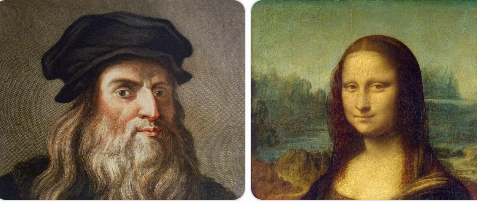
Leonardo da Vinci is remembered as one of history’s greatest artists, but painting was only one part of his life He was fascinated by anatomy, engineering, mathematics, architecture, mechanics, and nature. His notebooks contain drawings and ideas covering an enormous range of subjects.
Leonardo studied human anatomy by examining bodies and recording detailed observations. He also designed concepts for machines, bridges, flying devices, weapons, and other inventions.
What makes his life particularly unusual is the sheer variety of subjects that captured his attention. He did not fit neatly into the category of artist or scientist.
His famous paintings, including Mona Lisa and The Last Supper, represent only a fraction of the interests that occupied his mind.
Leonardo spent much of his life observing the world and recording ideas that sometimes had little connection to one another.
2. Benjamin Franklin
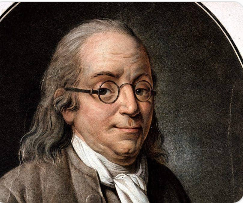
Benjamin Franklin was not simply a politician involved in the founding of the United States.
He was also a printer, writer, scientist, inventor, diplomat, and publisher.
Franklin became wealthy through his printing business and later devoted considerable time to scientific experiments. His investigations into electricity became especially famous.
He also invented or developed practical devices, including bifocal glasses and the Franklin stove.
Franklin had an unusual approach to self-improvement as well. He created a personal system based around virtues that he wanted to develop in his daily life.
Later, he became an important diplomat and played a significant role in relations between the American colonies and France during the American Revolution.
His life therefore crossed several completely different fields, from printing and science to international diplomacy and politics.
3. Harriet Tubman
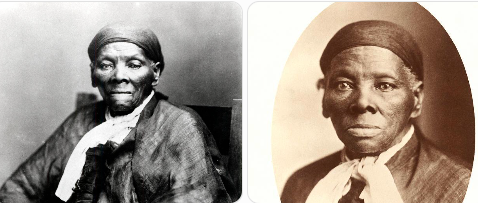
Harriet Tubman was born into slavery but eventually escaped and then returned repeatedly to help other enslaved people reach freedom.
After escaping, she became one of the best-known figures associated with the Underground Railroad.
Tubman made numerous journeys back into slaveholding states, helping guide people toward freedom. She operated under extremely dangerous circumstances and had to avoid capture.
Her activities did not end with the Underground Railroad.
During the American Civil War, Tubman worked for the Union as a nurse, cook, scout, and spy. She also became associated with the Combahee River Raid, which helped free hundreds of enslaved people.
Later in life, she supported causes involving formerly enslaved people, women, and her local community.
Her life moved through several very different stages, from slavery and escape to military service and activism.
4. Nikola Tesla
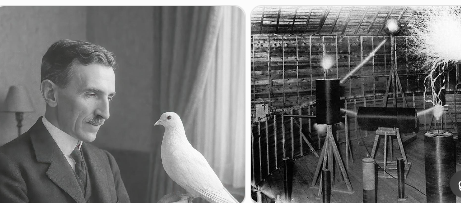
Nikola Tesla is famous for his contributions to electrical engineering, but his personal habits and interests were also unusual.
Tesla was known for having an extraordinary memory and for visualizing machines in his mind before constructing them.
He developed important work involving alternating-current electrical systems and made major contributions to motors, wireless technology, and electrical engineering.
Tesla also had a strong interest in pigeons. During his later years in New York, he regularly fed and cared for pigeons.
He lived a relatively unconventional life and devoted much of his time to scientific work rather than building a conventional family life.
Tesla’s combination of intense scientific focus, unusual personal habits, and ambitious ideas made his life very different from that of many scientists of his era.
5. Isaac Newton
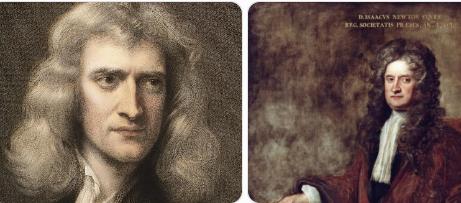
Isaac Newton is one of the most influential scientists in history, but his interests extended far beyond physics and mathematics.
Newton spent a significant amount of time studying alchemy, an early tradition involving experiments with substances and attempts to understand how matter could be transformed.
He also studied theology and wrote extensively about religious subjects.
His scientific achievements included major work on gravity, motion, optics, and mathematics.
Newton’s life therefore does not fit the modern image of a scientist who focuses exclusively on laboratory experiments and equations.
He could spend years thinking about subjects that today belong to completely different fields.
His work on physics eventually became foundational to modern science, while many of his other interests remained separate from the scientific legacy for which he is best known.
6. Catherine the Great
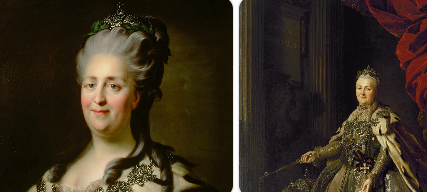
Catherine the Great became one of Russia’s most powerful rulers despite being born a German princess rather than a member of the Russian royal family.
She traveled to Russia as a teenager after being selected as a potential bride for the future emperor Peter III.
She converted to Russian Orthodoxy, learned the Russian language, and immersed herself in Russian culture and politics.
Eventually, Catherine seized power in a coup against her husband and became empress.
During her reign, Russia expanded its territory and increased its influence in Europe.
Catherine also corresponded with major European thinkers of the Enlightenment and collected books and works of art.
Her path from foreign princess to powerful Russian ruler was highly unusual and involved political maneuvering, cultural adaptation, and a dramatic change in status.
7. George Washington
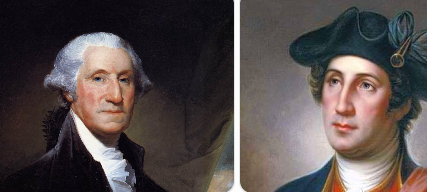
George Washington is usually remembered as a military commander and the first president of the United States.
Before becoming president, however, he had a long career as a surveyor, soldier, landowner, and plantation owner.
As a young man, Washington worked as a surveyor in Virginia and traveled through frontier territory.
His military career began during the French and Indian War, decades before the American Revolution.
During the Revolution, he became commander of the Continental Army and eventually led the American colonies to victory.
Washington then became the first U.S. president and established traditions that influenced the office for generations.
His life therefore stretched across several major periods of American history, from colonial frontier exploration to the creation of a new national government.
8. Ada Lovelace
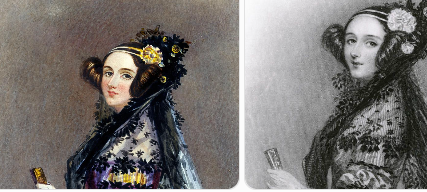
Ada Lovelace is often associated with the beginnings of computer programming, but her background was also unusual.
She was the daughter of the poet Lord Byron, although she had very little relationship with him because her parents separated shortly after her birth.
Lovelace developed a strong interest in mathematics and science at a time when women faced major restrictions in education and professional life.
She became acquainted with Charles Babbage and studied his proposed Analytical Engine.
Her notes about the machine included an algorithm designed to be processed by it, which is why she is often described as the first computer programmer.
What makes her story especially interesting is that she was thinking about the potential of computing machines decades before electronic computers existed.
9. Genghis Khan
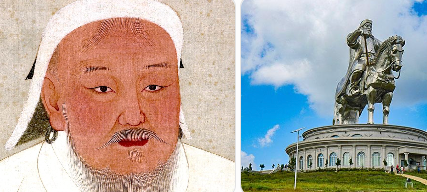
Genghis Khan’s rise began in extremely difficult circumstances.
Born as Temüjin, he experienced the death of his father while still young. His family was subsequently abandoned by their tribe and struggled to survive.
Instead of remaining a minor tribal figure, Temüjin gradually built alliances, defeated rivals, and united many Mongol tribes.
In 1206, he was proclaimed Genghis Khan.
He went on to create the foundation of the Mongol Empire, which eventually became the largest contiguous land empire in history.
His rise from an isolated young boy facing hardship to the ruler of a vast empire was one of the most dramatic transformations in medieval history.
10. Josephine Baker
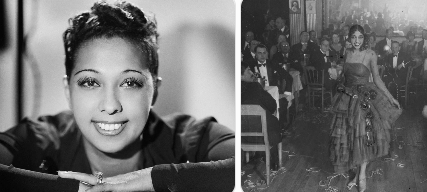
Josephine Baker was born in the United States but became an international star after moving to France.
She became famous as a dancer and entertainer in Paris during the 1920s, developing a stage persona that made her one of the best-known performers of her generation.
Her life later took an unexpected turn during World War II.
Baker worked for the French Resistance and used her celebrity status and international travel to assist resistance activities.
After the war, she became involved in the American civil rights movement and refused to perform for segregated audiences.
She also adopted children from different countries and backgrounds, creating what she called her “Rainbow Tribe.”
Her life moved from entertainment to resistance work and civil rights activism, making her much more than a famous performer.