
Some places seem to hold history in a way that books cannot fully reproduce. Ancient streets, weathered walls, carved monuments, ruined homes, temples, fortifications, and abandoned settlements can preserve evidence of how earlier societies lived and worked. Walking through such places allows visitors to see the physical spaces where people once traded goods, worshipped, governed communities, built homes, created art, and traveled across distant regions.
Historical places are valuable because they preserve more than impressive architecture. Their remains can reveal details about technology, social organization, trade, religion, agriculture, transportation, and everyday life. A road can show how communities were connected, while an ancient water system can reveal how people adapted to their environment. A preserved house can provide clues about family life, and a marketplace can demonstrate the importance of commerce.
Many historic sites have survived because of unusual circumstances. Some were buried by volcanic eruptions, others were protected by remote landscapes, while some were gradually abandoned and later preserved through archaeological work. Their stories are often incomplete, and researchers continue to study evidence to understand what happened in these places.
Pompeii and the Remarkable Preservation of Roman Life
Pompeii in Italy is one of the clearest examples of a place where the physical remains of an ancient community provide an unusually detailed picture of everyday life. In AD 79, the eruption of Mount Vesuvius buried Pompeii and the nearby city of Herculaneum. The volcanic material covered buildings, streets, objects, and other remains, helping preserve evidence that would otherwise have disappeared through ordinary decay.
The archaeological areas of Pompeii, Herculaneum, and Torre Annunziata are recognized by UNESCO as a World Heritage property. Excavation has gradually revealed buildings, public spaces, shops, baths, theaters, homes, and other features of Roman urban life. UNESCO describes Pompeii as an exceptional archaeological site because of the extent of its preserved urban environment.
One particularly interesting feature is the graffiti found on Pompeii’s walls. Some inscriptions were political, while others were personal or related to everyday communication. These small marks provide a different perspective from official Roman inscriptions because they preserve fragments of ordinary public expression.
Herculaneum offers another remarkable form of preservation. The volcanic material preserved wooden objects, food remains, architectural elements, and other materials that rarely survive at archaeological sites. These discoveries provide researchers with evidence about the practical details of life in a Roman community.
Petra and the Nabataean World
Petra in modern Jordan is famous for monumental structures carved into sandstone cliffs, but its importance extends far beyond its dramatic appearance. The site was an important Nabataean caravan city and a major crossroads connecting regions associated with Arabia, Egypt, and the eastern Mediterranean.
UNESCO notes that Petra’s location supported long-distance trade involving goods such as incense, silk, and spices. The city’s remains include rock-cut tombs, temples, public buildings, religious sites, roads, and an extensive water management system.
The water system is particularly significant because Petra developed in an environment where controlling and storing water was essential. Channels, cisterns, reservoirs, dams, and other structures helped manage seasonal rainfall.
These features show that the city depended on sophisticated engineering as well as trade. Petra was not simply a collection of impressive stone monuments. It was a functioning urban center that required infrastructure, planning, skilled workers, merchants, and systems for managing scarce resources.
The surviving remains also reveal cultural connections. Petra’s architecture combines local Nabataean traditions with influences associated with Hellenistic design, reflecting the city’s position within wider networks of exchange.
Machu Picchu and the Inca Landscape
High in the Andes of Peru stands Machu Picchu, a fifteenth-century Inca settlement surrounded by dramatic mountain landscapes. The site contains approximately 200 structures, including areas associated with agriculture, residence, ceremony, and other activities.
UNESCO identifies Machu Picchu as an important tangible legacy of the Inca civilization and highlights the relationship between the archaeological site and its surrounding landscape. Stone terraces, roads, irrigation features, and other structures demonstrate how the settlement was integrated with its mountainous environment.
The terraces are especially important because they demonstrate how the Incas adapted construction and agriculture to steep terrain. Instead of treating the surrounding mountains as an obstacle, the builders incorporated the landscape into the design of the settlement.
Machu Picchu also contains evidence of careful planning. Its different areas were arranged according to specific functions, while paths and terraces connected the settlement with its wider surroundings.
The exact purpose of the site remains a subject of scholarly discussion. UNESCO notes that questions remain about aspects of its role, including its relationship with astronomy and agricultural practices.
This combination of known evidence and unanswered questions is part of what makes the site historically valuable.
Angkor and the Cities of the Khmer Empire
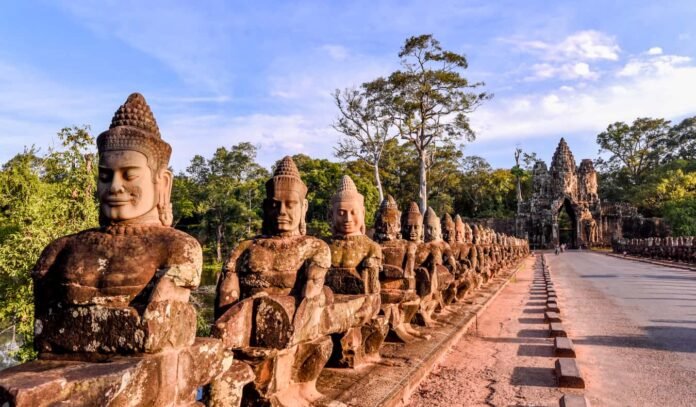
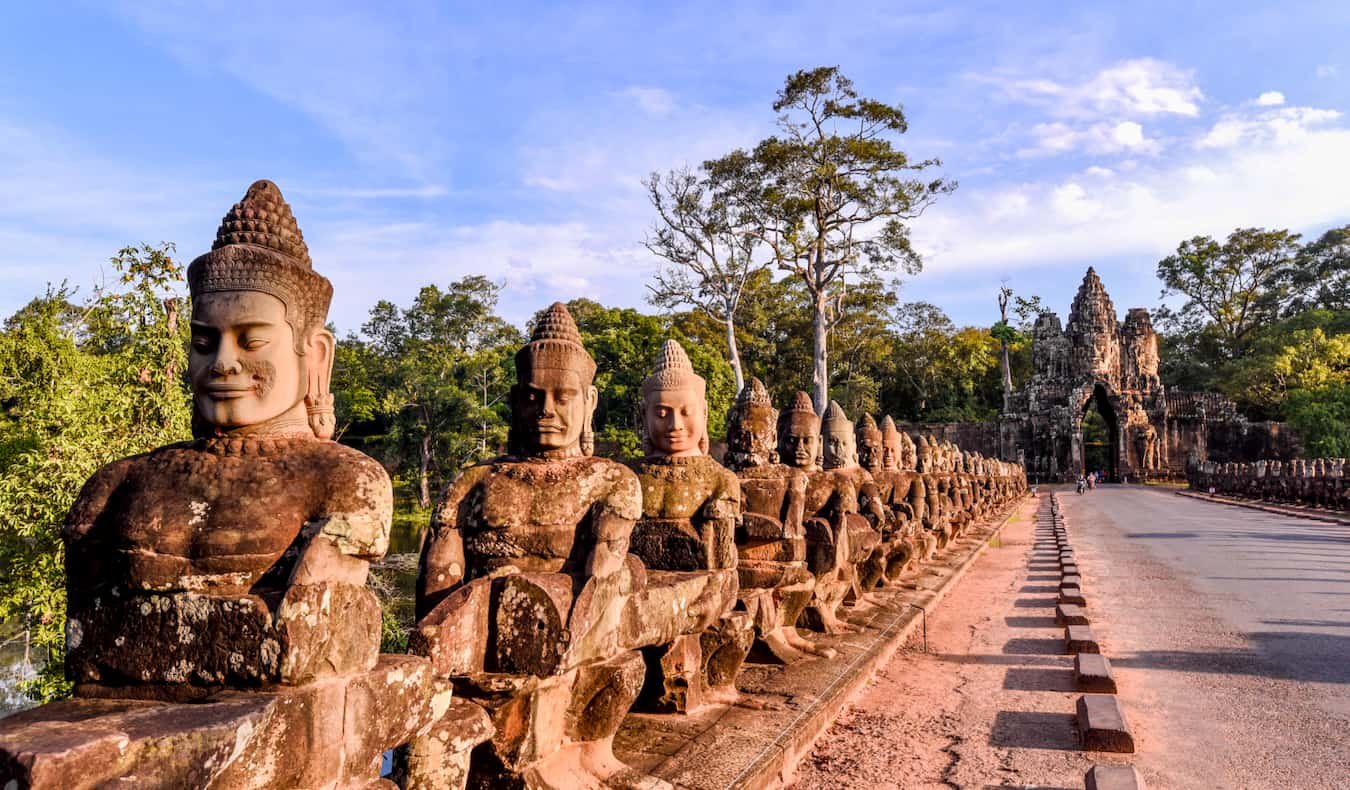
Angkor in Cambodia represents an enormous archaeological landscape connected with the Khmer Empire. The site is not simply one temple. It covers approximately 400 square kilometers and contains numerous temples, reservoirs, canals, roads, embankments, and other structures.
UNESCO describes Angkor as one of the most important archaeological sites in Southeast Asia. The remains represent several capitals associated with the Khmer Empire between the ninth and fifteenth centuries.
Angkor Wat is perhaps the most recognizable monument within the area, but the surrounding archaeological landscape is equally important for understanding the civilization that created it.
The extensive water infrastructure provides evidence of large-scale planning. Reservoirs, canals, and other hydraulic structures were integrated into the wider urban environment.
These features suggest that water management was closely connected with settlement and agricultural systems. The remains therefore tell a story about engineering and environmental adaptation as well as religious architecture.
The Ancient Streets of Roman Cities
Ancient Roman cities often contained much more than monumental temples and government buildings. Streets connected homes, shops, public facilities, workshops, and entertainment spaces.
Pompeii provides an unusually clear example because large sections of the ancient city survived beneath volcanic deposits. UNESCO notes the presence of public baths, theaters, an amphitheater, the forum, temples, and other structures within the excavated city.
Walking through these streets in the present day can provide a sense of how closely different activities were located within an ancient urban environment.
Shops and workshops were positioned along routes used by residents and visitors. Public buildings provided spaces for political, religious, social, and recreational activities.
The layout itself becomes historical evidence. It shows how movement, commerce, public life, and domestic life were connected.
Ancient Water Systems as Historical Records
Water infrastructure is sometimes overlooked when people think about historic places. Monumental buildings attract attention, but channels, wells, reservoirs, pipes, and drainage systems can reveal how a community functioned.
Petra provides a particularly strong example. UNESCO highlights the city’s extensive water management system, which included channels, tunnels, diversion dams, cisterns, and reservoirs.
Such systems required planning and maintenance. They also demonstrate an understanding of local geography and seasonal water availability.
Water infrastructure can therefore tell historians about population needs, engineering skills, agriculture, public health, and settlement patterns.
In many ancient communities, the ability to control water was closely connected to the ability to support a large population.
Ancient Homes Reveal Everyday Life
Large monuments often dominate photographs of historical sites, but ordinary homes can provide some of the most useful evidence about daily life.
House layouts can reveal how people used different spaces. Kitchens, storage rooms, courtyards, sleeping areas, workshops, and entrances can help researchers understand domestic routines.
At Pompeii and Herculaneum, the preservation of buildings and household objects provides unusually detailed evidence about Roman domestic environments. UNESCO notes that the archaeological material includes everyday objects and evidence of private life.
These discoveries remind us that history was experienced inside homes as much as in royal courts and public monuments.
Places That Preserve Ancient Trade
Historical sites can also reveal how far communities were connected to one another.
Petra is a strong example because its development was closely associated with caravan trade. Its position between important regions allowed merchants and travelers to move through the city while transporting valuable goods.
Trade left physical evidence. Roads, storage facilities, marketplaces, caravan routes, imported materials, and architectural influences can all provide clues.
The presence of foreign artistic styles or materials does not necessarily mean that a society abandoned its own traditions. Instead, it can show how communities adapted outside influences while maintaining local identities.
Landscapes Can Be Historical Evidence
A historical place is not always limited to buildings. The surrounding landscape can be essential to understanding why a settlement developed where it did.
Machu Picchu demonstrates this connection particularly well. The settlement was built within a mountainous environment, and its architecture, agricultural terraces, roads, and water systems were closely integrated with the surrounding terrain.
Petra provides another example where mountains, natural passages, and water availability influenced the development of the city.
The landscape can therefore be considered part of the historical record. Geography often influenced where people settled, how they traveled, what they produced, and how they constructed their communities.
Preserved Writing Adds Another Layer of History
Buildings and objects provide physical evidence, while written records can preserve personal and institutional information.
Pompeii contains examples of wall graffiti that include political slogans and personal messages. Herculaneum has also produced important written materials, including wax tablets and papyri.
These records are valuable because they show that ancient people communicated through more than formal inscriptions.
A short inscription on a wall can sometimes reveal a person’s concerns, political interests, humor, or relationships with the surrounding community.
Written evidence becomes particularly powerful when combined with archaeological discoveries. Researchers can compare words with buildings, objects, and environmental evidence to develop a fuller understanding of a historical site.
The Importance of Archaeological Preservation
Historical places do not survive automatically. Weather, vegetation, pollution, earthquakes, tourism, development, and natural deterioration can threaten archaeological remains.
Preservation therefore requires continuous research, conservation, documentation, and careful management.
UNESCO’s descriptions of major archaeological sites repeatedly emphasize the importance of protecting these places while allowing people to study and understand them. Petra, Angkor, Machu Picchu, and the archaeological areas around Pompeii all require ongoing conservation efforts because their remains are valuable but vulnerable.
Preservation is not simply about keeping old stones in place. It is about protecting evidence that can answer questions about human societies.
What Ruins Can Teach Us About Ordinary People
Historical places often provide information about people whose names were never recorded in major historical accounts.
A workshop can show what artisans produced. A house can reveal domestic arrangements. A road can demonstrate how people traveled. A storage area can provide clues about food and trade. A drainage system can reveal how a city handled practical challenges.
These details help historians move beyond famous individuals and examine the broader communities that built and used historical places.
This approach also makes history more relatable. People centuries ago still needed food, water, shelter, transportation, tools, entertainment, and social connections.
Why Some Historical Questions Remain Unanswered
Even exceptionally preserved sites cannot answer every question.
Buildings may survive while their original uses remain uncertain. Written records may be incomplete. Objects can be moved from their original locations. Later inhabitants may modify earlier structures.
Researchers must therefore distinguish between established evidence and interpretation.
Machu Picchu provides a useful example. Although its structures, terraces, roads, and other features provide extensive evidence, aspects of its exact role remain debated. UNESCO itself notes that several questions about the site remain unresolved.
Uncertainty does not make archaeological research less valuable. Instead, it demonstrates why careful examination of evidence is important.
Historical Places Connect the Present With the Past
Visiting an ancient site can create a different relationship with history. Dates and descriptions from books become easier to understand when connected to physical spaces.
A street once used by Roman residents, a water channel built by Nabataean engineers, a terrace constructed by Inca builders, or a reservoir associated with the Khmer world represents more than an old structure. Each one is evidence of human decisions made in a particular environment.
These places also demonstrate that civilizations were complex. Their achievements involved engineers, farmers, builders, artists, merchants, administrators, craftspeople, and countless other people.
The monuments that survive today are therefore the visible remains of much larger societies.
Protecting Stories That Cannot Be Replaced
Historical places are valuable because they contain evidence that cannot always be recreated once it is lost. A building can be photographed, documented, or reconstructed in limited ways, but the original archaeological context provides information that copies cannot fully reproduce.
Preserving these locations allows future researchers to study questions that may not even have been considered yet.
New technologies can also reveal information that earlier researchers could not easily detect. Mapping, material analysis, digital documentation, and other scientific methods continue to expand what can be learned from old places.
The more carefully these sites are preserved, the more opportunities future generations will have to investigate their stories.
A Journey Through Centuries of Human Experience
Historical places preserve much more than impressive architecture. They contain traces of decisions, routines, technologies, beliefs, trade networks, environmental adaptations, and social relationships that shaped earlier societies.
Pompeii reveals an unusually detailed snapshot of Roman urban life. Petra demonstrates the achievements of the Nabataeans and the importance of trade and water management. Machu Picchu shows how the Inca integrated architecture, agriculture, roads, and settlement into a mountainous landscape. Angkor demonstrates the scale of Khmer urban planning and hydraulic infrastructure.
Each place tells a different story, and none can represent the entire human past. Together, however, historical sites help transform history from an abstract collection of dates into something physical and understandable.
The stones, roads, homes, walls, terraces, canals, inscriptions, and objects left behind by earlier societies continue to provide evidence of how people adapted to their surroundings and built communities. Protecting these places means protecting fragments of human experience that have survived for centuries and can still teach us about the world that came before our own.