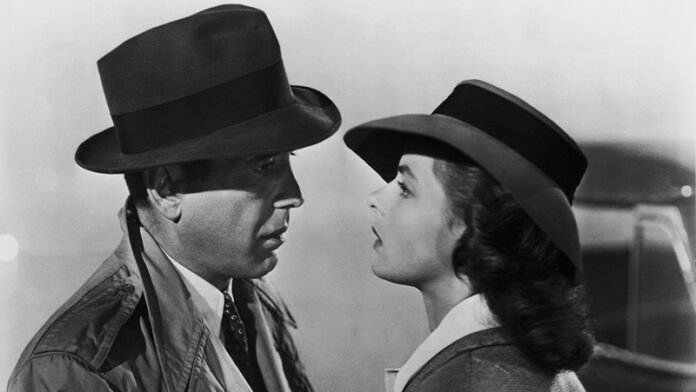

The golden age of cinema is often remembered through famous faces, celebrated films, glamorous premieres, and unforgettable performances. Names such as Charlie Chaplin, Audrey Hepburn, Cary Grant, and Marilyn Monroe remain familiar to audiences who may have been born decades after these stars reached the height of their careers. Yet the history of classic cinema contains countless other stories that are less frequently discussed. Some performers enjoyed remarkable success before gradually disappearing from public attention, while others worked behind the scenes and played important roles in shaping the industry without becoming household names.
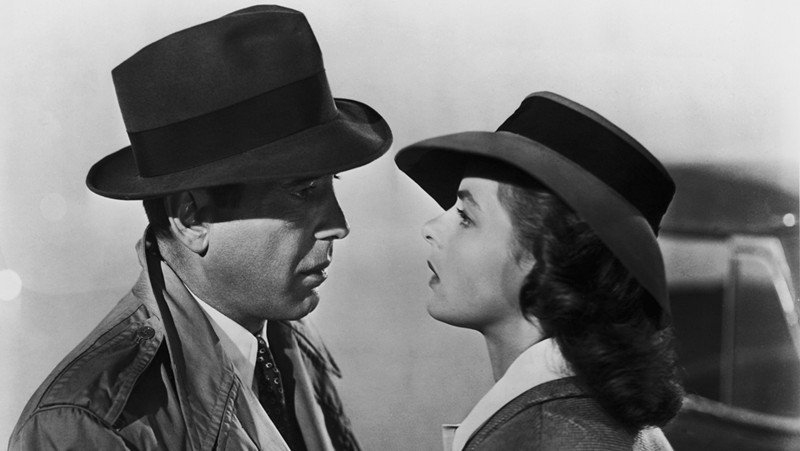
Please refer to the following profile on Getty Images Archival for further imagery:
http://www.gettyimages.co.uk/Search/Search.aspx?EventId=113854183&EditorialProduct=Archival&esource=maplinARC_uki_12nov Humphrey Bogart (1899 – 1957) and Ingrid Bergman (1915 – 1982) star in the Warner Brothers film ‘Casablanca’, 1942. (Photo by Popperfoto/Getty Images)
These forgotten stories reveal a different side of Hollywood and international cinema. They show that fame was rarely permanent and that successful careers could change dramatically because of changing audience tastes, new technology, personal decisions, studio contracts, or simple historical circumstances. Looking at these lesser-known experiences helps create a fuller picture of the people who contributed to the development of film.
The Silent Era Produced More Stars Than We Remember
Before synchronized dialogue became standard, silent cinema created an enormous international entertainment culture. Performers could become famous across borders because audiences did not need to understand a spoken language to appreciate expressive acting, physical comedy, or visual storytelling.
Many silent performers became internationally recognizable during the 1910s and 1920s. Some developed carefully constructed screen personas that audiences associated with particular types of stories. Others were successful for only a few years before changes in the industry affected their careers.
The transition to sound was particularly significant. A performer who had built a successful career around visual acting suddenly needed to work in a medium that required vocal performance. Some stars adapted successfully, while others struggled with the technological and artistic changes. Their disappearance from mainstream memory sometimes had less to do with talent than with the rapid transformation of cinema.
Clara Bow and the Original It Girl
Clara Bow became one of the most prominent stars of the 1920s and is often associated with the rise of modern celebrity culture. Her energetic personality and expressive performances helped her connect with younger audiences during a period when American society was changing rapidly.
Bow became especially famous through the 1927 film It, which helped popularize the term associated with a person possessing an appealing and magnetic quality. Her screen image represented a new kind of youthful independence that contrasted with some earlier portrayals of women in cinema.
Despite her enormous popularity, Bow eventually withdrew from Hollywood. The pressures of fame, intense media attention, and changes within the film industry contributed to a career that ended much earlier than audiences might have expected.
Today, her name is less familiar to many casual movie viewers than those of later Hollywood stars, yet her career provides an important link between silent cinema and the modern concept of celebrity.
Lon Chaney and the Art of Transformation
Lon Chaney became famous for his extraordinary ability to transform himself for different film roles. Known as the Man of a Thousand Faces, he developed a reputation for playing complex characters through makeup, physical movement, and expressive acting.
During the silent era, makeup was especially important because performers could not rely on dialogue to explain their characters. Chaney understood how changes in appearance could communicate personality, emotion, age, disability, or social position.
His performances in films such as The Hunchback of Notre Dame and The Phantom of the Opera became important examples of silent-era acting. He also demonstrated that physical transformation could become a serious artistic tool rather than simply a visual trick.
Chaney’s career was relatively short compared with many later stars because he died in 1930. Nevertheless, his approach influenced generations of performers and makeup artists. His story is a reminder that the history of cinema includes technical and artistic pioneers whose contributions may be less visible to modern audiences.
Louise Brooks and a Career Rediscovered Later
Louise Brooks was a major figure of the silent and early sound eras, particularly known for her distinctive appearance and performances in European and American cinema. Her short bob hairstyle became strongly associated with her image and later influenced fashion and popular culture.
Brooks appeared in films including Pandora’s Box, where her performance as Lulu became one of the defining screen roles of the late silent period. Yet her career did not develop into the long Hollywood success that might have been expected from such an influential performer.
She eventually left acting and lived outside the center of the entertainment industry. For many years, her reputation remained relatively limited compared with other stars of her generation. Later film historians and critics renewed interest in her work, helping introduce her to new audiences.
Her story illustrates an unusual aspect of celebrity history. A performer can disappear from mainstream attention for decades and later be rediscovered by people interested in film history.
Buster Keaton and the Quiet Comedian
Buster Keaton became one of silent cinema’s greatest comedians, but his career followed a complicated path. His famous expressionless screen persona became an important contrast to the highly expressive styles of other comedians.
Keaton’s comedy relied heavily on physical movement, carefully constructed situations, visual timing, and elaborate stunts. He often played characters who remained calm while surrounded by increasingly chaotic circumstances.
His films influenced later generations of filmmakers and comedians, but his career suffered after the arrival of sound and changes in studio control. He continued working in various capacities, including supporting roles, even when he was no longer receiving the same level of attention he had enjoyed during the silent era.
His later rediscovery helped restore recognition of his earlier achievements. Modern viewers can see how sophisticated silent comedy could be when physical performance, editing, camera placement, and timing worked together.
The Forgotten Work of Character Actors
Classic cinema is often remembered through leading stars, but thousands of character actors helped make those films believable. They played shopkeepers, detectives, neighbors, doctors, servants, journalists, soldiers, teachers, and countless other supporting roles.
Some appeared in hundreds of productions without becoming major celebrities. Their faces could be familiar to audiences even when their names were forgotten.
Character actors were particularly important because they gave supporting characters personality and credibility. A strong supporting performance could make a fictional town, workplace, family, or community feel more realistic.
The history of cinema therefore cannot be understood entirely through its biggest stars. Behind every famous leading actor were numerous performers whose contributions helped create the worlds audiences saw on screen.
The Women Behind Early Hollywood Production
Some forgotten stories involve people who were not primarily known as performers. Women working as producers, writers, editors, costume designers, and other creative professionals contributed significantly to early cinema.
One notable example was Lois Weber, who became an important director and producer during the silent era. Her films addressed social subjects and demonstrated that women could hold major creative responsibilities within the film industry.
Many women working in early cinema did not receive the same long-term recognition as the stars appearing in front of the camera. As film history became increasingly associated with famous actors and celebrated directors, the contributions of numerous creative professionals received less public attention.
Recovering these stories provides a broader understanding of how films were actually made. Cinema has always been a collaborative art form, and its development depended on far more people than the names appearing above the theater entrance.
When Fame Disappeared With the Changing Industry
A successful actor’s career could be strongly connected to a particular studio, genre, or screen persona. When audiences changed their preferences, the performer could quickly lose opportunities.
The transition from silent films to sound was one major example. Another was the decline of the traditional studio system and the gradual movement toward different approaches to filmmaking and celebrity management.
Actors who had once appeared in major productions could find themselves receiving smaller roles or fewer offers. Some continued working successfully in theater or television, while others retired from entertainment completely.
These changes demonstrate that celebrity has always been influenced by industry structures. Talent alone did not determine how long a performer remained visible.
The Mystery of Lost Films
Another reason some celebrity stories became forgotten is that many early films have not survived. Film preservation was not always treated as a priority during the earliest decades of cinema. Some prints deteriorated, were discarded, or disappeared over time.
As a result, historians sometimes know that a performer was once extremely popular even though only a small portion of that person’s work remains available for modern audiences.
This creates an unusual gap in film history. A star could once attract large crowds and receive extensive newspaper coverage, yet modern viewers may have little opportunity to see the performances that created that reputation.
Film preservation therefore plays a major role in determining which celebrities remain visible. What survives can influence what later generations remember.
Stars Who Left Hollywood by Choice
Not every forgotten celebrity disappeared because of failure. Some performers deliberately stepped away from the entertainment industry.
A person might decide to focus on family, pursue another profession, move away from Hollywood, or simply become uncomfortable with the demands of public life. Others may have preferred theater or private life to the growing pressures of celebrity culture.
In an era before social media, leaving the public eye could be remarkably effective. Without constant online coverage, a person could gradually become absent from newspapers and magazines and eventually disappear from popular discussion.
This makes some forgotten celebrity stories particularly interesting. Their absence was not necessarily a sign of professional decline. In some cases, it was the result of a personal decision to live differently.
Why Forgotten Stars Deserve Another Look
Film history is often presented through a relatively small collection of famous names. This makes the story easier to understand, but it can also hide the enormous number of performers and creative professionals who contributed to cinema.
Exploring lesser-known careers reveals how unpredictable fame could be. Someone could become one of the biggest stars of a particular decade and then become less familiar to later generations. Another performer might receive little attention during their lifetime but become highly regarded by later film historians.
These stories also encourage audiences to look beyond celebrity status. A person’s historical importance does not always correspond to the number of modern followers, references, or commercial products associated with their name.
The Enduring Value of Cinema History
The forgotten celebrity stories of the golden age of cinema demonstrate how quickly cultural memory can change. Clara Bow, Lon Chaney, Louise Brooks, Buster Keaton, Lois Weber, and countless supporting performers all belonged to different parts of a rapidly developing entertainment industry. Their careers were shaped by technological changes, public taste, studio structures, personal choices, and the preservation of their work.
Some became famous almost overnight. Others spent decades developing their craft. Some left the spotlight voluntarily, while others were gradually pushed aside by a changing industry. A few were rediscovered years later when historians and audiences began looking more closely at their contributions.
Their stories remind us that cinema is much larger than its most famous stars. Every era contains performers whose work deserves another look, especially when surviving films, archives, photographs, and historical records allow modern audiences to reconnect with the past. The golden age of cinema was not created by a handful of household names alone. It was built by a vast community of actors, directors, writers, technicians, designers, musicians, producers, and other professionals whose combined efforts transformed moving pictures into one of the world’s most influential art forms.